
A life with horses.
A way of seeing.
Balance & Awareness is the lens through which I understand horses…
and through them, myself.
Horses have been part of my life for more than fifty years.
I have ridden them, bred them, raised them, trained them, competed with them, learned from them, struggled with them, and many times, had to reconsider what I thought I knew because of them.
For a long time, like so many riders, I searched for answers.
The right exercise.
The right technique.
The right way.
But somewhere along the way, the questions began to change.
And when the questions changed, so did everything else.
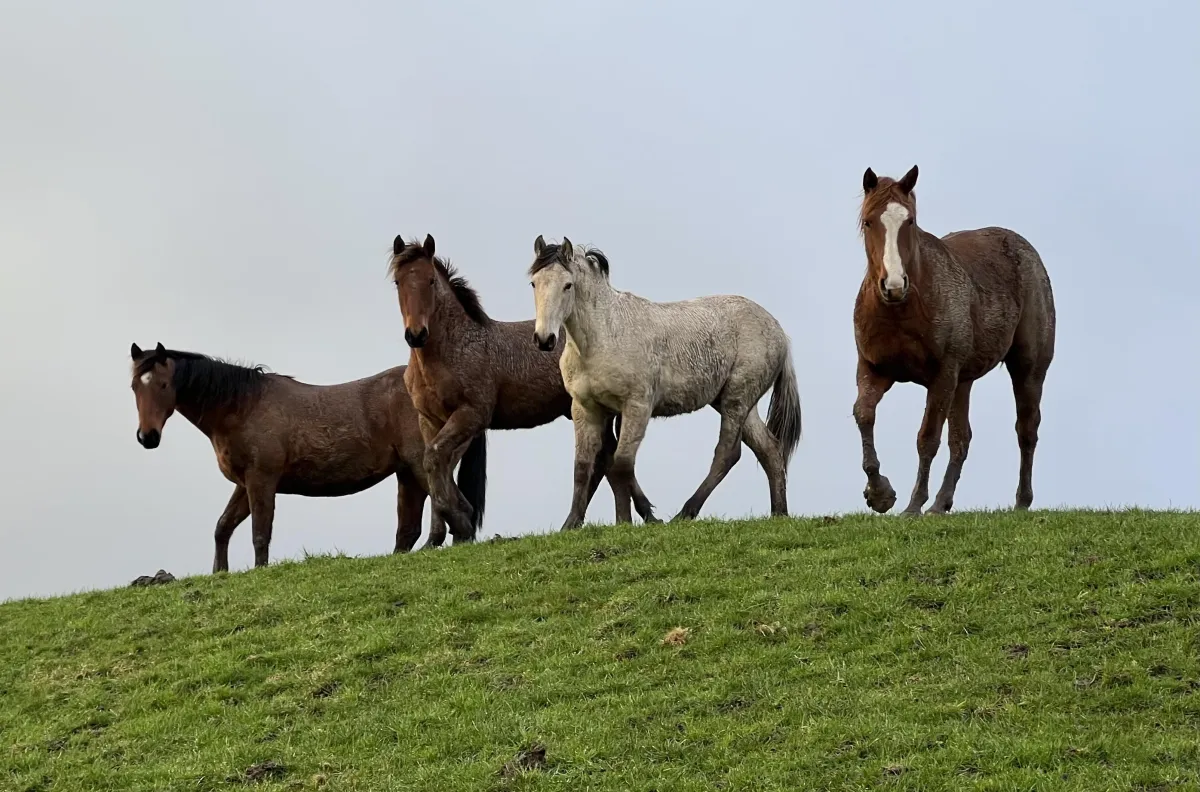
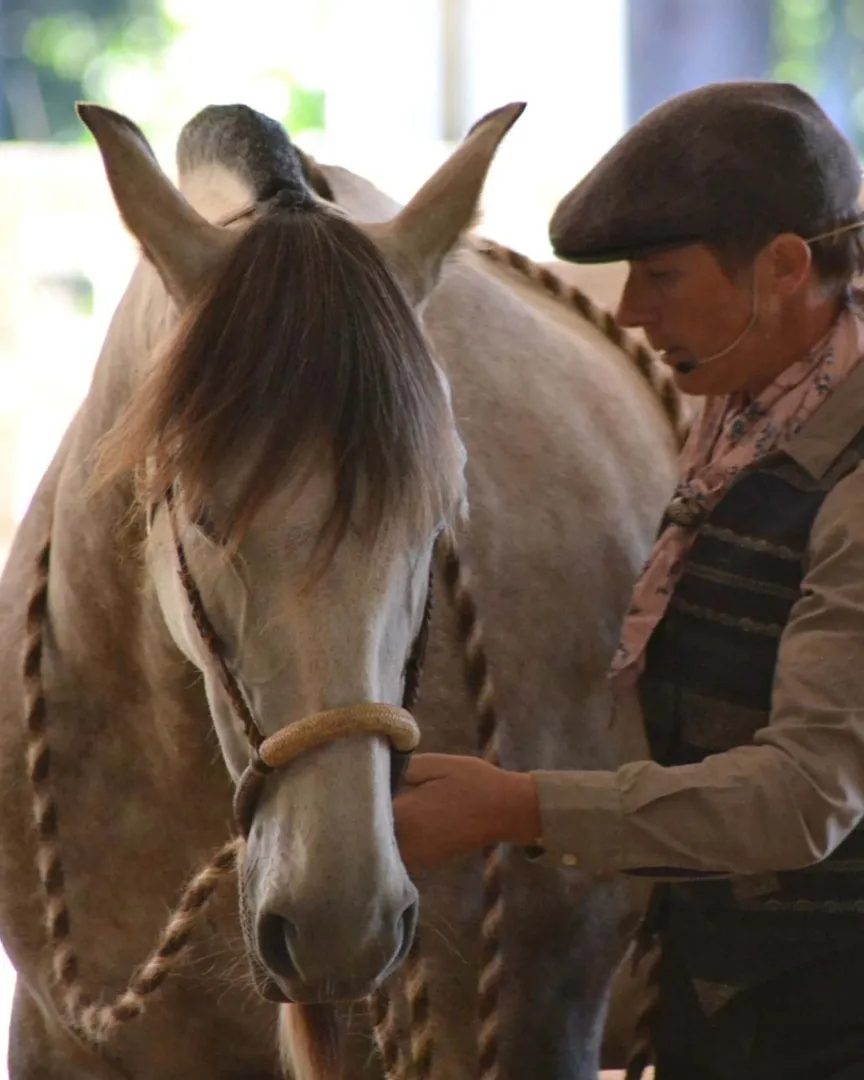
It Didn't Begin With a Method
My horsemanship has never followed one straight line.
Over the years, many people, traditions and disciplines have influenced me, and I remain deeply curious about the knowledge carried through generations of horsemen and horsewomen before us.
But I have also learned that no method can replace observation.
No exercise can replace feel.
And no technique can tell us everything we need to know about the horse standing in front of us.
The more I learned, the less interested I became in collecting answers.
I became more interested in understanding.
The Questions Changed
Rather than asking only:
How do I make this happen?
I began asking:
Why is this happening?
What is the horse communicating?
Where is the balance?
Where is the restriction?
What am I bringing to the conversation?
What might change if I become quieter, clearer or more aware?
That shift changed the way I worked with horses.
Instead of seeing an exercise as something to accomplish, I began to see it as a way of revealing information.
An exercise could show me where a horse felt confident. Where balance was lost.
Where the body was restricted. Where understanding was missing. Where I had asked too much.
Or where I simply needed to give the horse a little more time.
The exercise itself was no longer the destination.
It became part of the conversation.
Balance & Awareness Became the Lens
The name Balance & Awareness came to me very early.
At the time, I don't think I fully understood how much those two words would eventually come to mean.
BALANCE
Balance is physical, of course.
The balance of the horse.
The balance of the rider.
The ability to move with greater ease, alignment, strength and freedom.
But balance also lives within the relationship.
Between asking and listening.
Direction and freedom.
Energy and stillness.
Clarity and softness.
AWARENESS
Awareness makes that balance possible.
Awareness of the horse.
Awareness of ourselves.
Awareness of what happens beneath the obvious.
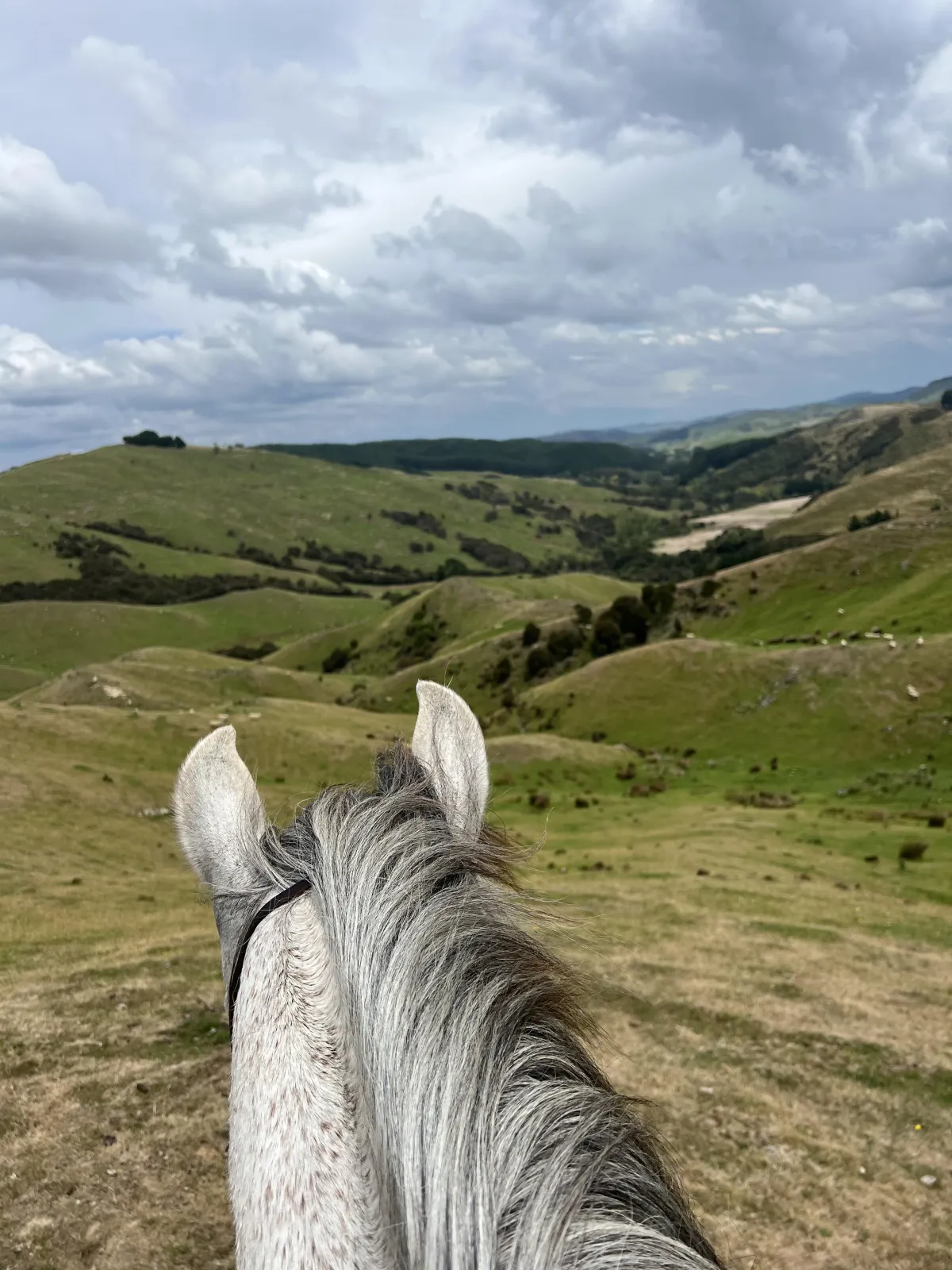
Over time, Balance & Awareness stopped being simply the name of my work.
It became the lens through which I saw horsemanship.
And increasingly, the lens through which I saw life.
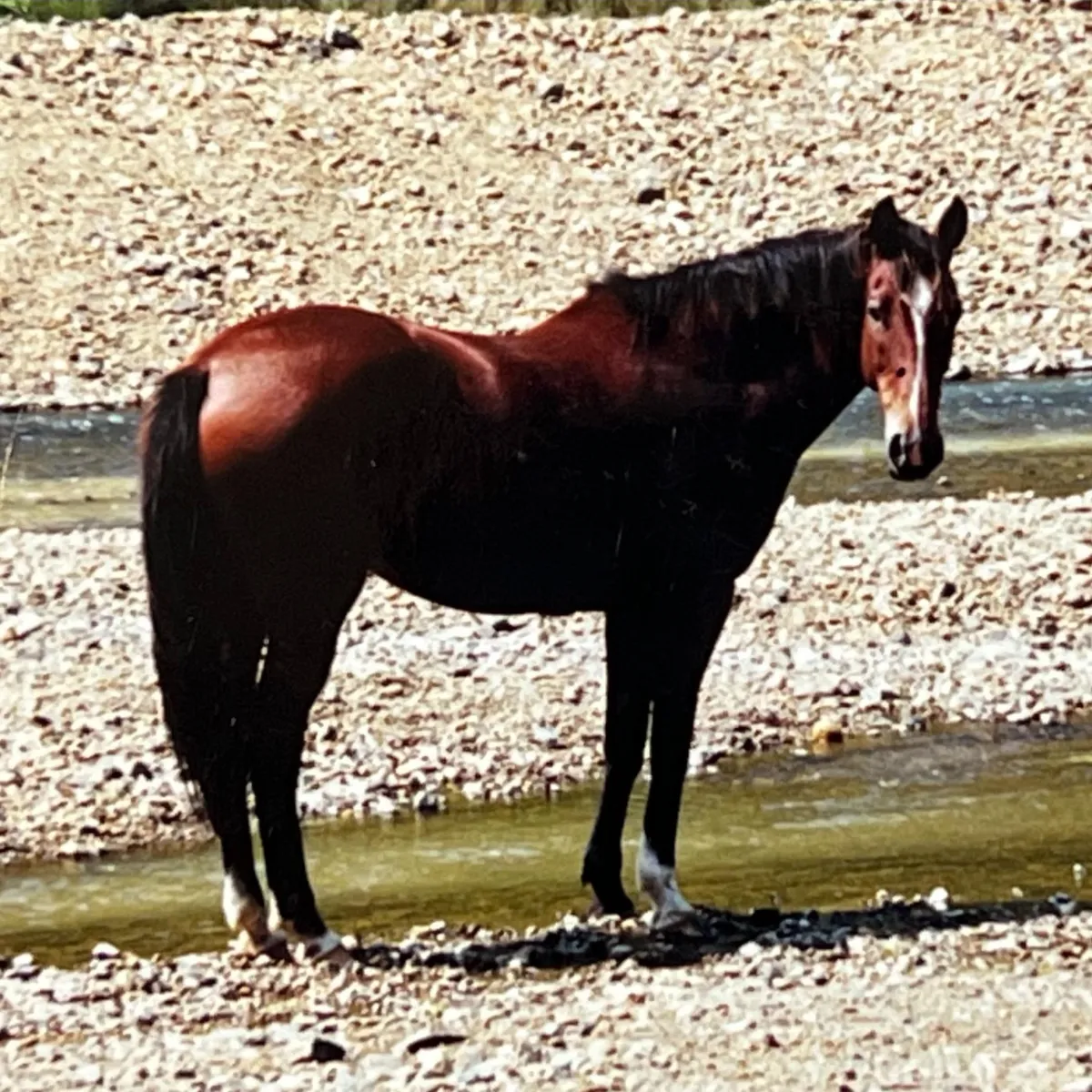
The Horses Have Always Been the Teachers
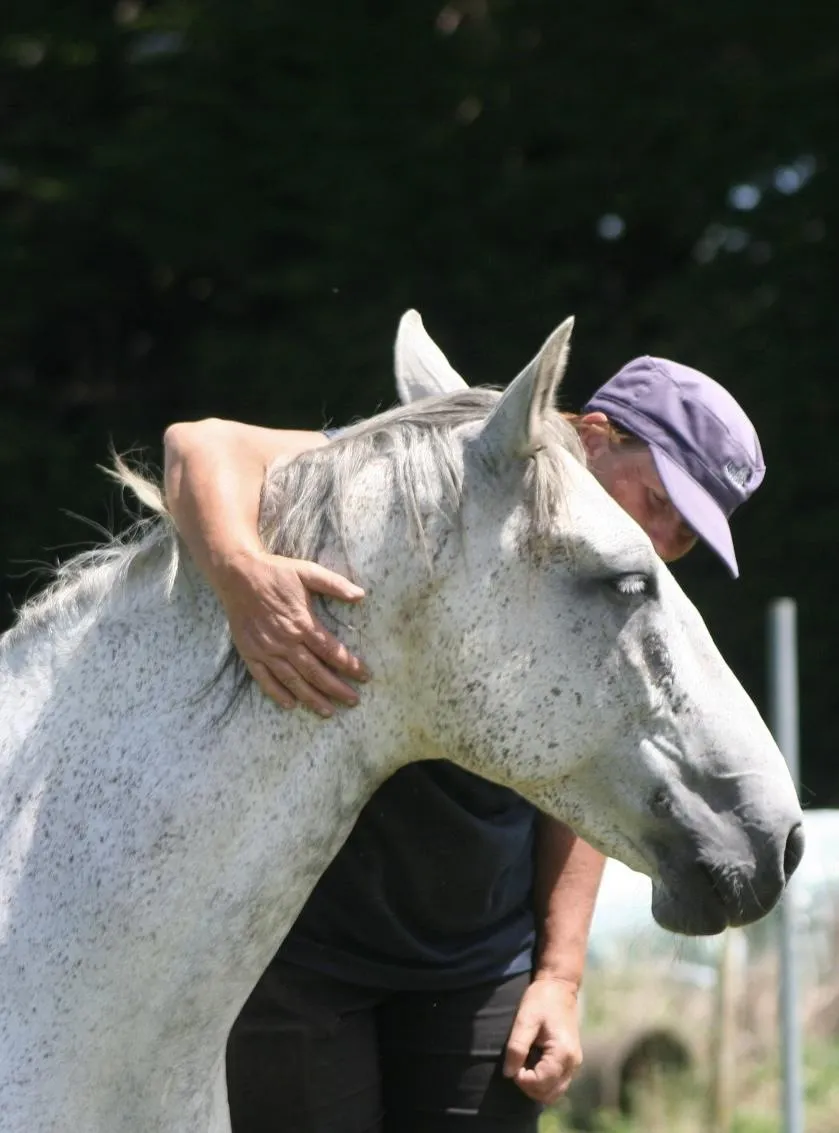
I believe the horses have always been the teachers.
Each generation simply chooses whether it is willing to listen.
The horses who have taught me the most usually haven't been the easiest.
Sometimes they have been the horses who challenged my understanding.
The ones who made me question an assumption.
The ones who could not do what I thought they should be able to do.
The ones who required me to become softer, clearer, more patient or more observant.
And sometimes the greatest lessons have arrived in very small moments.
A change in a breath.
A shift of weight.
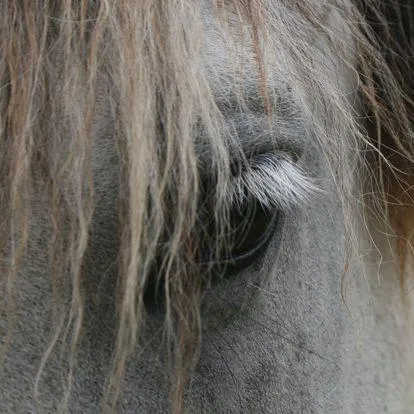
A softened eye.
A movement that suddenly becomes effortless.
A horse quietly saying,
Yes. That makes sense now.
Those moments continue to fascinate me.
They are why I still consider myself a student.
One Conversation
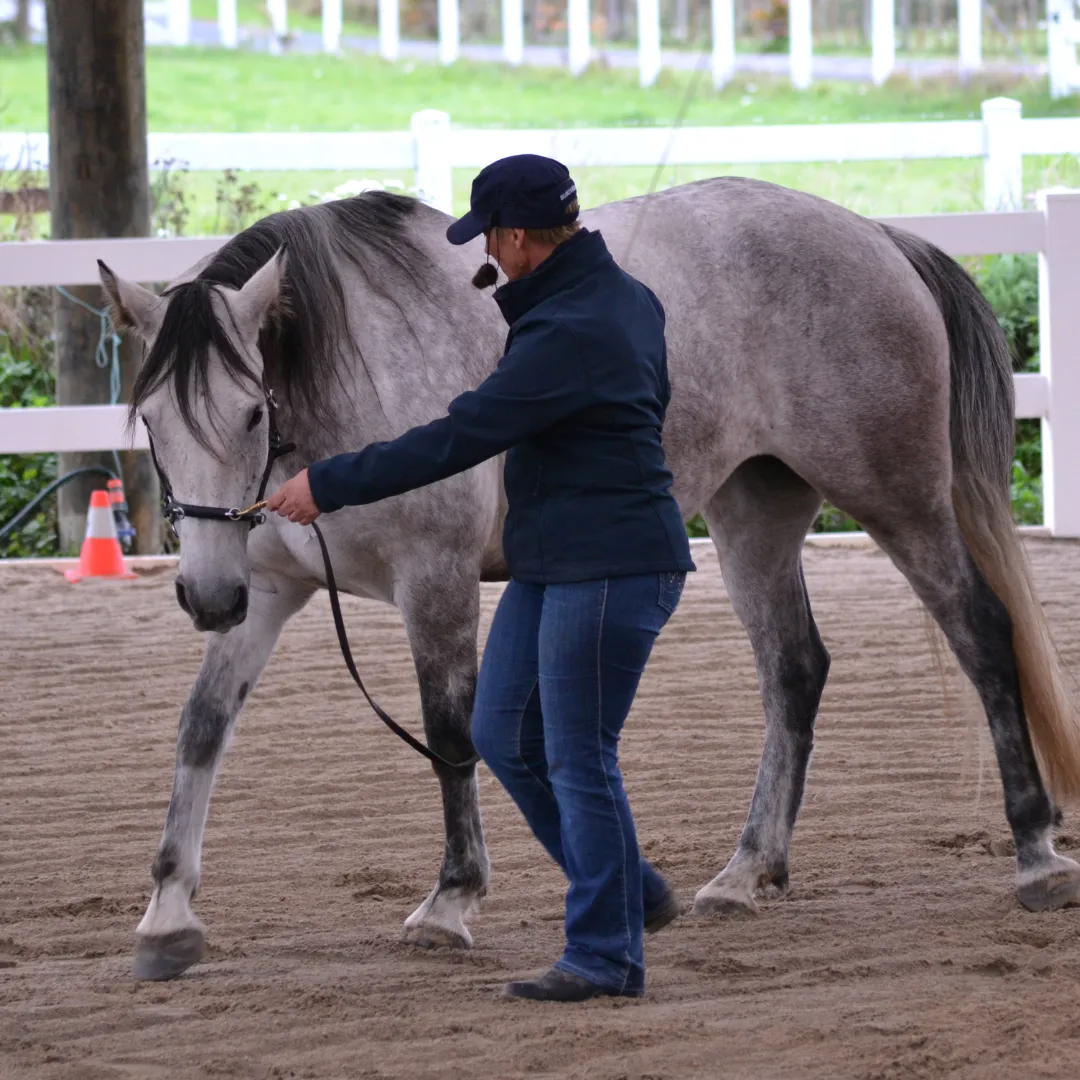
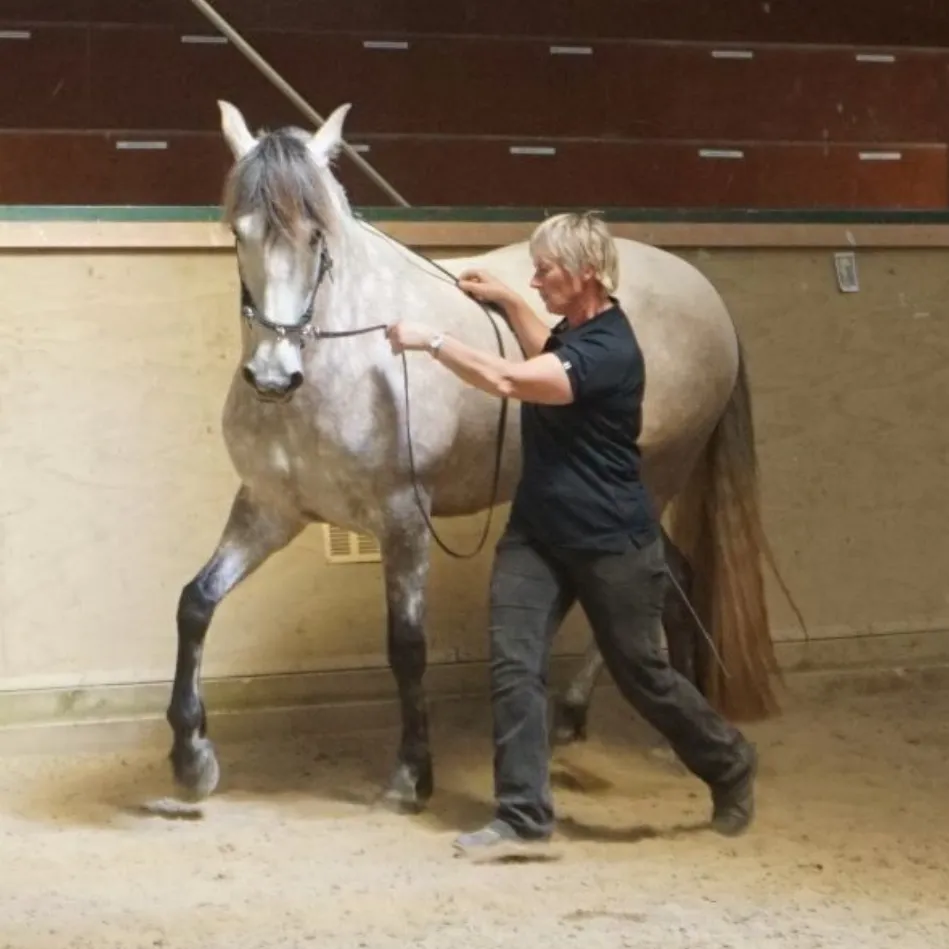
My work may move through Groundwork, Work In-Hand and Ridden work, but I don't see them as separate worlds.
They are different places to explore the same conversation.
The conversation does not suddenly change when we climb into the saddle.
Only our position does.
Balance · Awareness · Clarity · Timing · Feel · Preparation · Softness
Groundwork helps us understand the body and build communication.
Work In-Hand allows us to refine balance, posture, movement and feel with extraordinary detail.
Ridden work lets us continue that conversation together from the saddle.
Sometimes I draw from classical horsemanship.
Sometimes from the California Vaquero tradition.
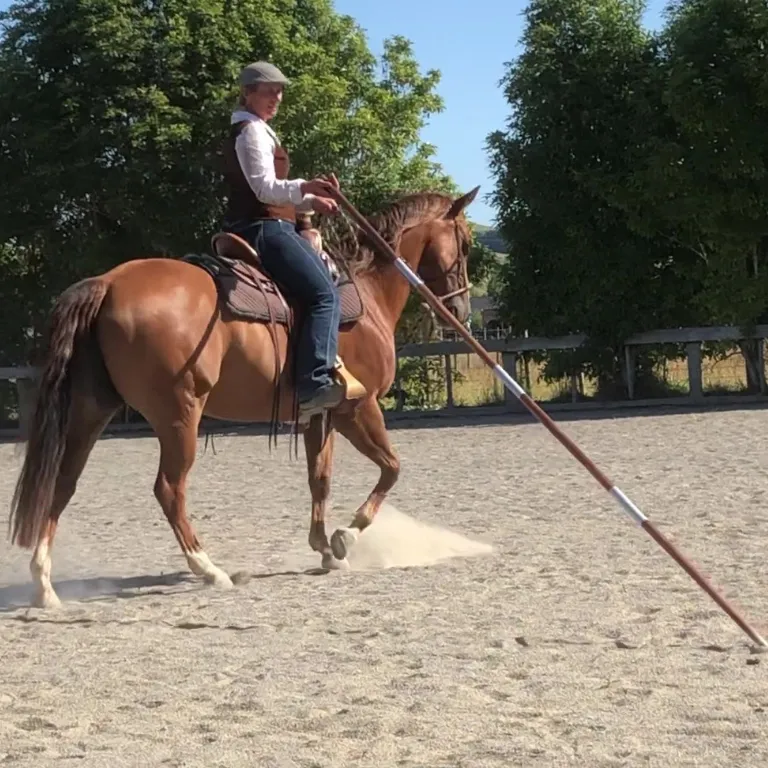
Sometimes a simple pole, a Garrocha, a cavesson or a bosal becomes a way of asking a familiar question from a slightly different angle.
The tool is never the philosophy.
The horse remains at the centre of the work.
I Am Interested in What Lies Underneath
I am interested in more than whether a horse performs an exercise correctly.
I want to know:
Was there balance?
Was there understanding?
Was there confidence?
Could the horse breathe?
Could the horse remain present?
Could the movement be offered rather than forced?
And what happened within the rider while all of that was taking place?
Because horses have an extraordinary way of reflecting us back to ourselves.
Our hurry.
Our uncertainty.
Our assumptions.
Our effort.
Our tension.
But also:
Our patience.
Our clarity.
Our courage.
Our ability to become quiet enough to notice.
For me, horsemanship and personal awareness have gradually become inseparable.
There Is No Finish Line
I don't believe horsemanship is something we ever complete.
There is always another layer.
Another horse.
Another question.
Another piece of understanding that changes how we see everything that came before it.
I continue to study.
I continue to experiment.
I continue to learn from people whose work makes me think.
And most importantly, I continue to learn from the horses themselves.
My understanding today is not the same as it was ten years ago.
I hope it won't be identical ten years from now.
To me, that is not uncertainty.
That is what learning looks like.
What I Aspire to Offer
When I coach, my aim is not simply to give someone a collection of techniques to take home and reproduce.
Techniques have their place, and I will offer them when they are useful — but I want to help people see more.
To recognise what their horse may already be communicating.
To become curious when something is difficult rather than immediately labelling it resistance.
To develop a clearer understanding of balance and movement.
To discover how much can be communicated through subtle changes in feel, timing, position and intention.
And to become confident enough in their own observation that, eventually, they need fewer answers from someone else.
The deepest horsemanship does not come from following instructions perfectly.
It comes from developing the awareness to recognise what the horse you are with needs.
Perhaps You Are Here for the Same Reason
Perhaps you've reached the point where simply knowing how is no longer enough.
Perhaps you find yourself asking why.
Greater softness without losing clarity.
Greater refinement without losing joy.
Better movement without sacrificing the relationship.
Perhaps you want to understand your horse more deeply — and are willing to discover a little more about yourself along the way.
If so, you may feel very much at home here.
Welcome to Balance & Awareness.
FOLLOW US!
© 2026 Lynley Bolt - Balance & Awareness - All Rights Reserved
Platform provided by HorseBizAutomated